
For commerce and industry
Soon, feeding energy from your roof into the grid may cost more than it earns.
The KEV is ending, while the solar obligation and negative feed-in prices are approaching. A DMES is your solution.
Dezentrale Multi-Energie-Systeme // DMES
Feeding electricity into the grid is becoming less attractive.
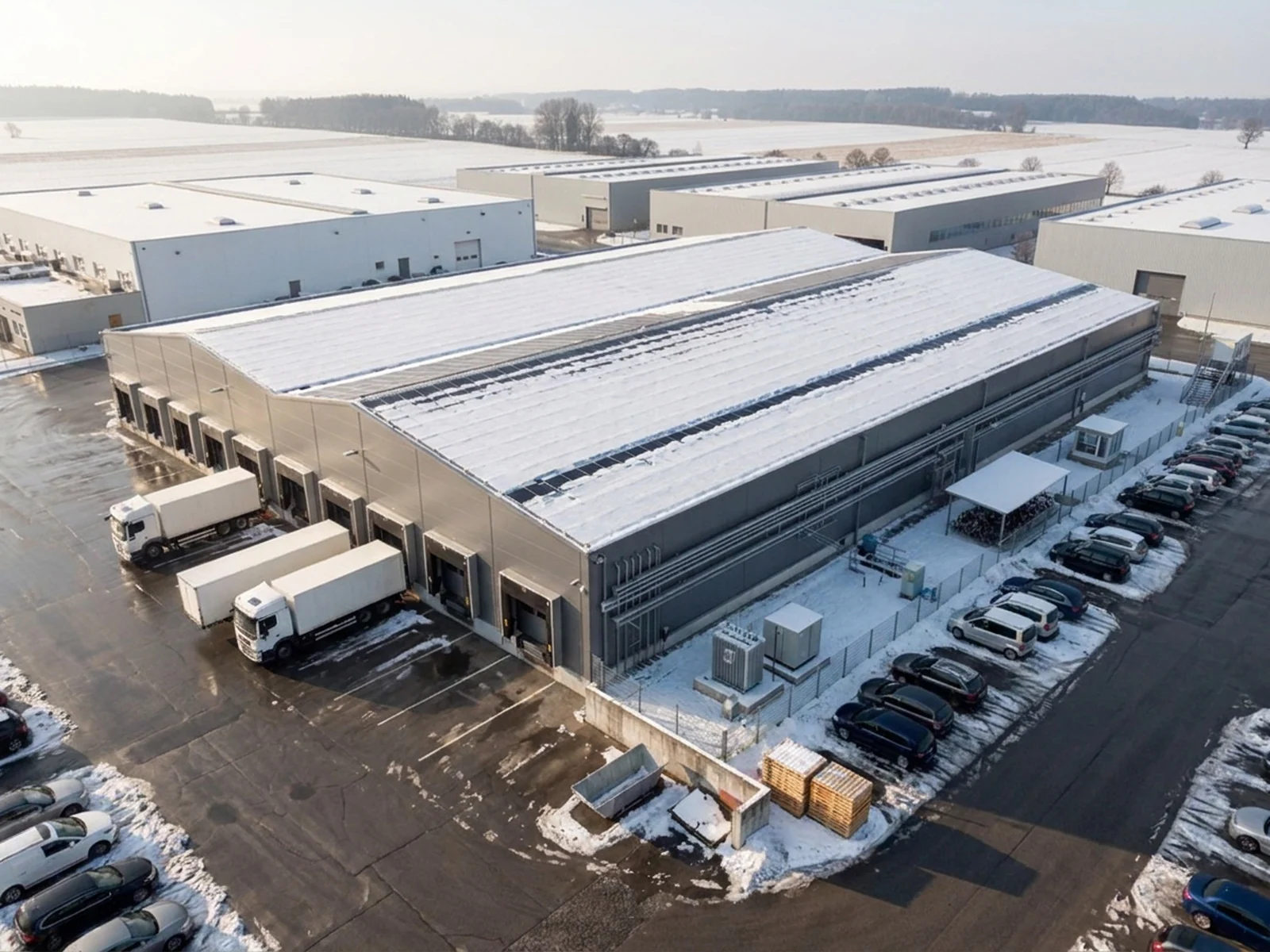
First the KEV ends, then prices can turn negative, while the solar obligation continues to require more PV. Many industrial and commercial roofs installed during the KEV period are losing guaranteed remuneration as contracts expire after 15 to 25 years. After that, market conditions apply, and installations above 150 kW may have no minimum remuneration. From 2027, remuneration is expected to follow the hourly spot-market price. At midday and on days with low demand, electricity may be worth very little, and at negative prices you may even pay to export. The grid operator may also curtail up to 3 per cent of production without compensation. At the other end of the calculation, demand charges depend on quarter-hourly peaks, and production start-up peaks can also increase costs. Operations continue throughout the year, while solar generation is highest in summer. Sites that do not adapt may lose on both sides.
From obligatory roof to revenue system.
Few sites have better conditions. Large roof areas, a predictable load profile and genuine electricity and heat demand throughout the year. What is missing is the storage that shifts the surpluses to where they earn money. There are two tools for this. The battery caps your peak loads, shifts midday production into the evening and earns on the spot market and with flexibility. The hydrogen long-duration storage system collects the weekend and summer surpluses and brings them back as electricity and heat during the working weeks of winter, for hall heating, hot water and low-temperature processes instead of gas. On request we design the system so that critical processes in the building keep running during a grid outage. Our core is long-duration storage. The DMES stands quietly inside the building like a plant room, without an outdoor container, without continuous noise and without objections, and delivers the heat along with it. Where a Battery Energy Storage System (BESS) is the economic answer as a complement, we realise it with our partners. eRevo AG Energy Revolution is the pioneer of decentralised multi energy systems in Europe and plans on a technology-neutral basis.
Summer // surplus
-
 Photovoltaics
Own production on the roof
Photovoltaics
Own production on the roof
-
 Electrolysis
Electricity becomes hydrogen and heat
Electrolysis
Electricity becomes hydrogen and heat
-
 H₂ in metal hydride
Solid state at 35 bar, inside the building
H₂ in metal hydride
Solid state at 35 bar, inside the building
Winter // demand
-
 Fuel cell
Hydrogen becomes electricity and heat
Fuel cell
Hydrogen becomes electricity and heat
-
 Electricity
Site, vZEV and LEG, grid
Electricity
Site, vZEV and LEG, grid
-
 Heat
Heating, hot water, heat network
Heat
Heating, hot water, heat network
over 75% overall efficiency with combined electricity and heat use · over 30 years’ service life · 0.5 to 16 MWh per room · modularly scalable to over 100 MWh
How much can your operation and property earn?
Your energy should earn money, not cost it. Five levers can turn the obligatory roof into a revenue system.
Self-consumption
Every kWh of self-generated electricity reduces purchased-power costs. Production, cooling, compressed air, ventilation, heat pumps and charging infrastructure can run on electricity from your own roof. Storage can substantially increase self-consumption in the evening and winter as well.
Peak Shaving
The peak determines the bill. Demand charges are based on quarter-hourly peaks. The battery caps them month after month and can lower grid costs.
Spot market and flexibility
Your storage participates in the market. Energy is stored when electricity costs little and delivered when it is more expensive. Your flexibility can also earn revenue on the market.
Heat instead of gas
Earn twice from the same system. Hall heating, hot water and low-temperature processes can use heat from both operating states, during charging through waste heat from electrolysis and during discharge through the fuel cell. This can reduce gas consumption and the CO2 levy.
A clean balance
Scope 2 is becoming a tender criterion. Using your own solar electricity throughout the year round is a straightforward answer to customers' CO2 questions. From around 1,000 tonnes of CO2 per year, additional state funding instruments may become available.
Buying electricity when it is expensive and giving it away when it is cheap. It is time to stop.
Storage can improve both sides of the calculation. Your own electricity can be consumed throughout the day, while exports can be timed for more favourable prices. Procurement changes too. New tariff models from large energy suppliers combine energy supply and flexibility and reward the capabilities your operation provides. Figures under discussion range from 14 to 20 centimes per kWh including grid fees, with electricity costs in some cases close to zero. Annual electricity consumption above 100 MWh may provide free access to the electricity market.
We remove complexity and improve profitability.
One system, one point of contact.
Design, planning, partners and business models from a single source. Battery storage comes from our partners, and our system architecture includes short-duration storage where appropriate.
Technology-neutral planning.
We do not sell a technology. We sell the energy system that can pay off for your site. The recommendation follows the analysis.
Proven in live operation.
The world premiere installation in Eich has been operating at full load since April 2024. Six years of development work have made eRevo AG Energy Revolution the pioneer of decentralised multi-energy systems in Europe.
The next step
Potential analysis
One month and one robust answer. What could your site earn with storage, and what system would support it?