
Energy Intelligence // EI
The intelligence that turns storage into infrastructure.
EMS, AI-supported optimisation and data-driven system orchestration form the software layer behind Energy Intelligence. It manages the system across hours, days and seasons.
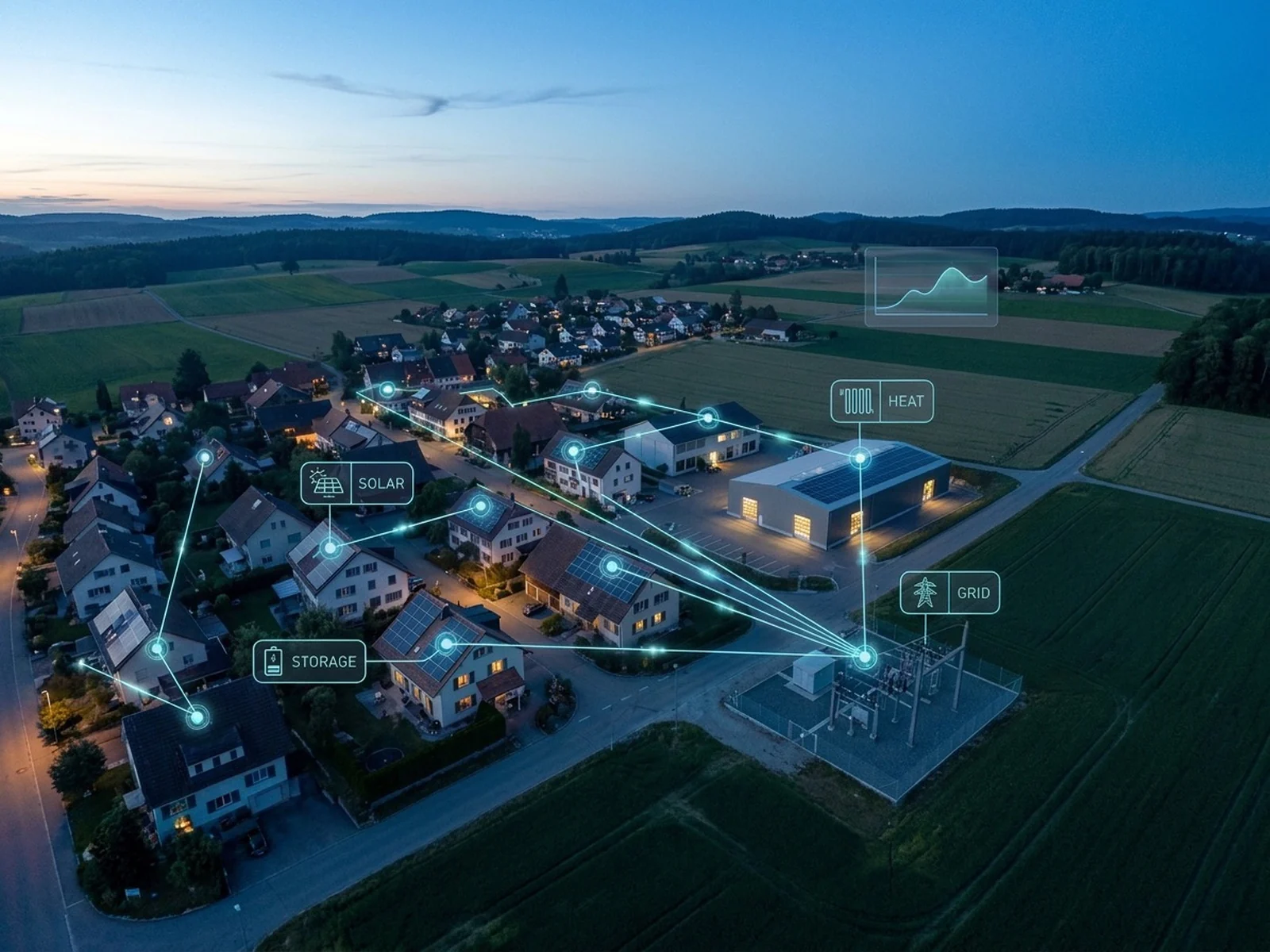
Hardware stores. Software earns.
The economic and operational performance of a DMES plant comes not only from storage and components, but also from the software intelligence that controls the system across several time horizons. eRevo refers to this layer as Energy Intelligence. It combines a conventional energy management system, or EMS, AI-supported optimisation and data-driven system orchestration.
Not a feature. The connecting piece.
Energy Intelligence is not a downstream add-on, but the link between generation, storage, thermal use and grid interaction. It continuously decides when the system charges, stores or feeds energy back, connecting the physical plant with the markets in which it operates.
Four layers, one architecture.
01
Forecast-based control
Weather, load and price forecasts covering 24 to 72 hours are processed continuously and translated into anticipatory charging and discharging decisions. The system acts before demand arises.
02
Multi-asset optimisation
Electricity, heat, hydrogen, photovoltaics and grid supply are combined in a single optimisation. This is not isolated battery control, but an integrated energy-flow logic across the entire system.
03
Grid services
Peak shaving, responses to dynamic grid tariffs and balancing within vZEV and LEG structures. Control reserve may provide an additional revenue stream, but it is not the basis of profitability.
04
Self-learning operation
An AI operating layer based on open large language models is integrated into ongoing plant operation. It continuously evaluates operating data, detects anomalies and adapts control parameters throughout the plant’s life cycle.
Every plant learns. And every new one starts with the knowledge of all those before it.
Each system adds to the knowledge base. Over time, operating data from multiple assets strengthens optimisation, LLM-supported operations management and the transfer of learning from one plant to the next. This creates a technological lead that goes beyond the hardware and cannot be replicated in the short term.
Rooted in the core team, not bought in.
Software leadership from day one.
CEO Gregor Zust brings many years of leadership experience in software development and leads the strategic direction of the Energy Intelligence layer.
Industrial EMS experience.
CTO Bernhard Sax previously led the development of industrial energy management systems as CEO of pi-System GmbH. This experience forms the technical backbone of the Energy Intelligence architecture.
Developed further from data.
Energy Intelligence is a core eRevo technology. It is developed together with analytics partner Qynn Energy, which contributes economic assessment and ROI modelling for projects.
What does intelligence earn at your site?
The potential analysis does not work with rules of thumb; it simulates your system across every level, from load profiles and PV yield to heat and markets. The Quick Check is the first step.
Start Quick Check